
Stadium
Making basketball more fun
Our Stadium - A Goldfields Basketball Story
The story of basketball in the Goldfields is a story of people.
Long before indoor stadiums, NBL1 games, corporate boxes and grandstands, basketball was being built by a small group of enthusiastic players, administrators and volunteers who believed the sport had a future in Kalgoorlie-Boulder.
More than 70 years later, Evolution Mining Stadium stands as the latest chapter in that story, on the same Brookman Street site that generations of Goldfields families have called their basketball home.
Humble beginnings
Basketball’s roots in the Goldfields stretch back to the early 1950s.
Historical accounts record games being played on the floorboards of the Eastern Goldfields YMCA hall in Boulder Block Road, with YMCA physical director Bob McIlvaine instrumental in getting the sport established. A reduced-size basketball court was marked on the hall floor and, as interest grew, games soon moved outside onto bitumen courts.
By the mid-1950s an organised competition was established, with teams representing the YMCA, banks, Commonwealth Military Forces, postal workers and other local groups.
Among the early administrators were McIlvaine and Lyle Harris, while the sport quickly attracted a core of people who would go on to shape basketball in the region for decades.
The early conditions were a world away from those enjoyed by players today. Games were played outdoors, initially on Saturday afternoons before lighting allowed Friday night fixtures. The old leather-panel basketballs took such a pounding on the bitumen that they regularly needed to be re-stitched by local repairers.
Yet the game grew.
By 1955, Goldfields teams were competing at Country Week, beginning a representative tradition that remains an important part of Goldfields basketball today.
Women’s basketball also became firmly established during these formative years. Early local players included Shirley Green, Jan Carrington, June Stockdale, Mavis Cocking and Joy Mills, along with Judy Collard, whose son Dean Kemp would later become one of the outstanding basketballers produced by the region.
It was a small basketball community, but an increasingly passionate one.
Jack Neil and the early pioneers
Few people are more closely connected with the formative decades of Goldfields basketball than Jack Neil.
Neil became a leading figure as both a player and administrator and remained involved in local basketball for more than three decades. He was an inaugural president of the Eastern Goldfields Amateur Basketball Association and in 1967 became the Association’s first Life Member.
His contribution became so significant that, decades later, the Association established the Jack Neil Award for Services to Basketball in his honour.
Neil was not alone.
People such as Randal Hulme, Mark Dellar, Bill Baldwin and many others gave enormous amounts of time to developing the game and eventually pursuing something that, during the outdoor-court era, must have seemed ambitious: a permanent indoor basketball stadium.
The strength of basketball was ultimately built on these volunteers: people who coached, officiated, administered, fundraised, maintained courts and simply made sure games happened each week.
Finding a permanent home
Goldfields basketball went through its share of growing pains.
At one point two separate associations operated rival competitions, creating an intense local rivalry before basketball eventually consolidated under the Eastern Goldfields Amateur Basketball Association.
By the mid-1960s, the Association needed a permanent home.
The Brookman Street site was acquired and developed with significant assistance from the Town of Kalgoorlie. Outdoor courts were established on the former Kalgoorlie Tennis Club site, providing basketball with the location it still occupies today.
By 1967 the YMCA competition had joined the Association and the game was becoming increasingly unified.
Participation continued to grow through the late 1960s and 1970s, as did the standard of representative basketball.
In 1970 the Goldfields won a Country Week championship under coach Kevin Bartle, with Geoff Cairnduff scoring the winning goal on the final shot of the match. Later, with the construction of the stadium and the emergence of players including Rene Lieb, Eddie Cecins, Alan Cummins and Rob Bresa, the Goldfields combined to win four consecutive Country Weeks from 1983 to 1986.
Basketball was becoming deeply embedded in the sporting identity of the region.
The dream of an indoor stadium
The desire for an indoor basketball stadium existed long before one was finally built.
As far back as 1958, the Association considered purchasing and relocating a disused aircraft hangar from Meekatharra to create a two-court indoor facility. The cost of dismantling, transporting and rebuilding it made the proposal unworkable.
Other possibilities followed, including the former Cremorne Theatre, but each attempt fell away because of cost or suitability.
Former Treasurer Bill Baldwin then introduced a stadium fund, with a portion of every admission to the outdoor courts put aside towards the eventual construction of an indoor venue.
Progress was slow, but the dream never disappeared.
By the late 1970s, Jack Neil, Randal Hulme, Mark Dellar and others were continuing to drive the project.
And then Niels Hansen became central to turning the dream into reality.
Niels Hansen - the quiet achiever
An accomplished civil engineer and lecturer in civil engineering at the WA School of Mines, Niels Hansen became heavily involved with Goldfields basketball during the 1970s.
As Association Treasurer, Hansen brought professional engineering expertise to a project being driven largely by community volunteers.
His contribution was extraordinary.
Hansen designed the new stadium, prepared the contract documents and supervised its construction. Contemporary accounts record that he took extended service leave to work on the project and donated the value of his professional fee back to the Association.
Government, local government, the Association itself and years of community fundraising combined to finally make the indoor stadium possible.
The result was the original two-court indoor basketball stadium on Brookman Street.
When the Association later awarded Hansen Life Membership, the committee decided the stadium should also carry his name.
For decades afterwards, the home of Goldfields basketball would be known as Niels Hansen Stadium.
A new era indoors
The opening of the indoor stadium transformed basketball in the Goldfields.
Players who had spent years dealing with summer heat, wind and rain finally had a purpose-built indoor home with a quality playing surface and lighting suitable for high-level competition.
The venue quickly became much more than a local basketball stadium.
As junior and senior participation grew, Goldfields basketball began attracting higher-level competitions and events.
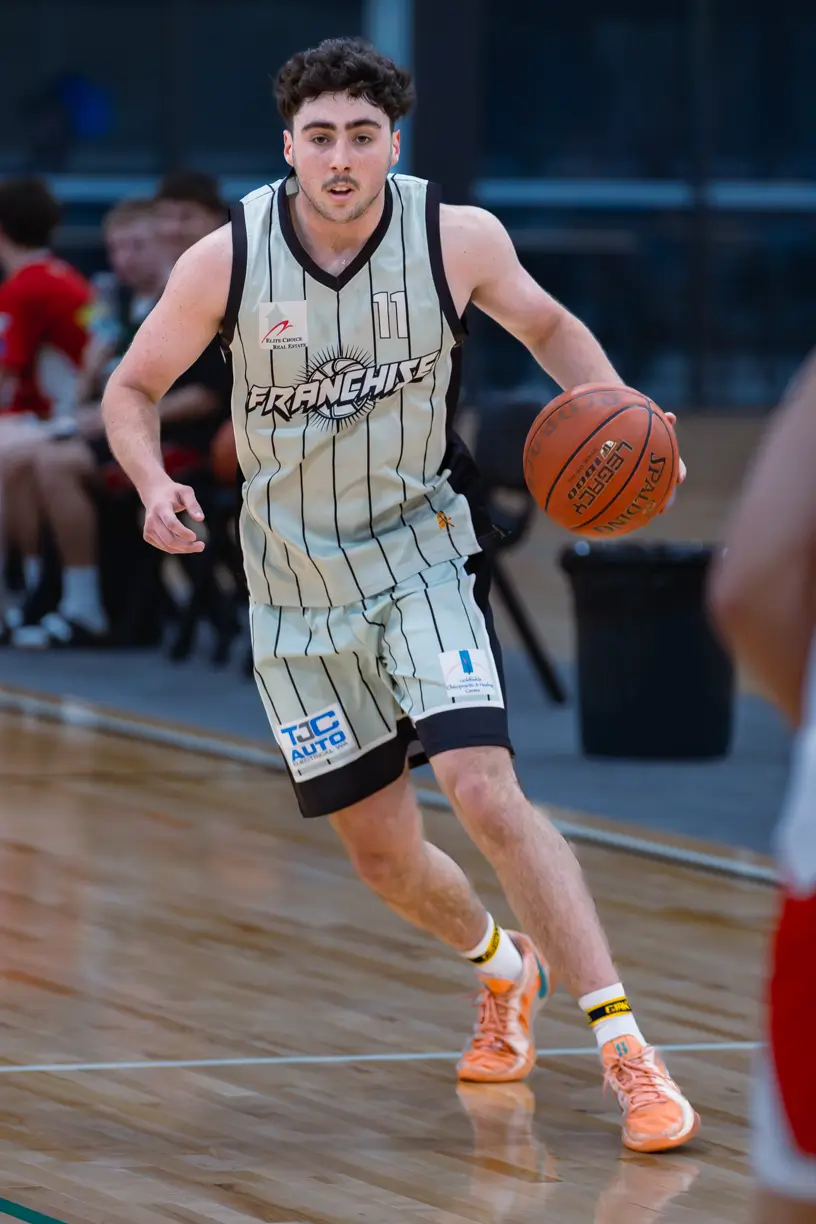
In 1990, the newly formed Goldfields Giants entered the State Basketball League, bringing elite WA basketball permanently to Kalgoorlie-Boulder.
The stadium also hosted major national fixtures, including Women’s National Basketball League games featuring the Perth Lynx and, in February 2004, an official National Basketball League game between the Perth Wildcats and Hunter Pirates.
By then, however, the original two courts were no longer sufficient.
The 1996 expansion
In 1996 another major chapter was added to the stadium.
A third indoor court was constructed, extending Niels Hansen Stadium and increasing the Association’s indoor capacity.
The work was undertaken while local competitions continued around the construction site, requiring considerable coordination from Association staff, administrators and volunteers.
That third court helped sustain the next generation of growth.
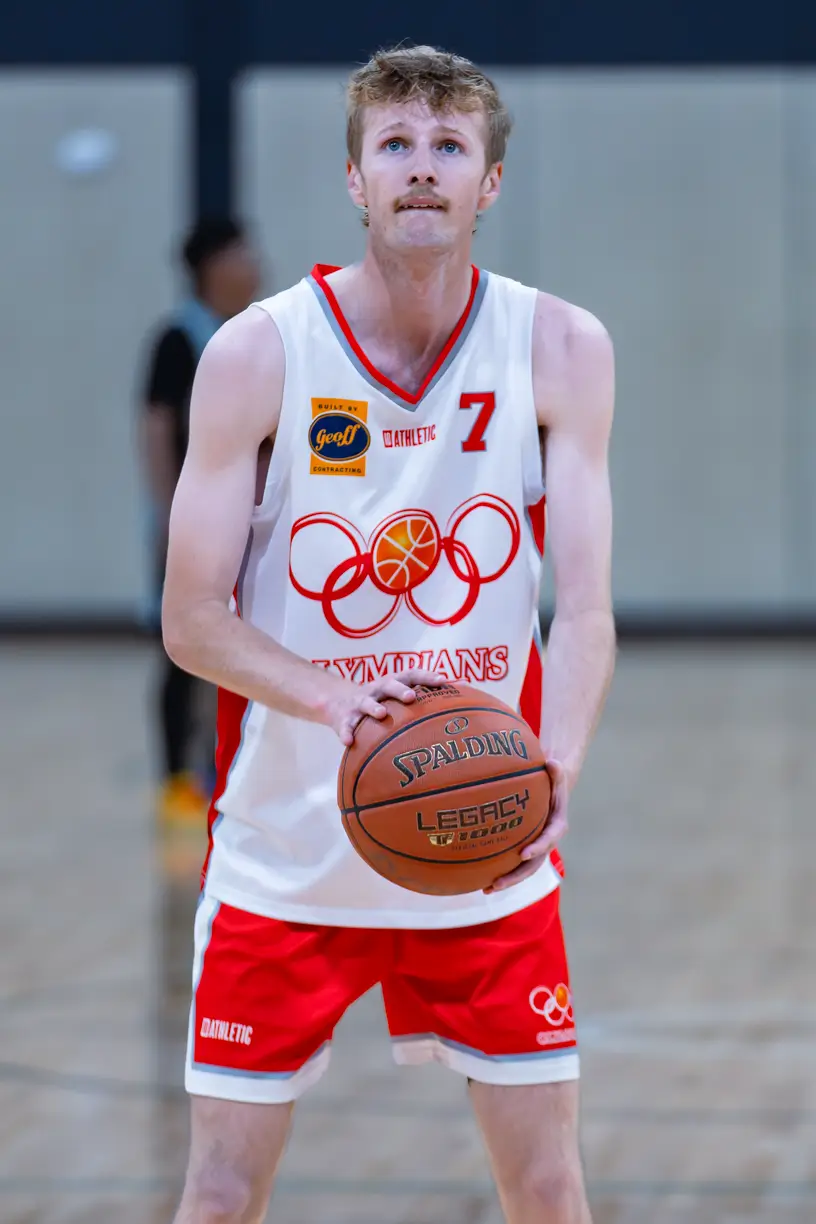
Junior competitions expanded, representative pathways developed, the Goldfields Giants became an established part of the State Basketball League and domestic clubs including CBC, Olympians, Saints, Scotch and later Maku continued a fierce local rivalry that had existed for generations.
At its peak in 2016-17, the Association involved more than 1,500 players, coaches and officials.
But once again, basketball had begun to outgrow its home.
The need to build again
By 2017, the two remaining outdoor courts had deteriorated to the point that they were deemed unsafe and permanently decommissioned.
A basketball operation that had effectively enjoyed five courts was suddenly restricted to three.
Participation declined, court availability became increasingly difficult and the ageing Niels Hansen Stadium was struggling to meet modern standards.
Changerooms and amenities were outdated. Court run-off areas did not comply with contemporary requirements. Maintenance was becoming increasingly difficult and the facility did not provide the infrastructure required for modern elite basketball.
The redevelopment of the stadium had first been identified as a strategic priority in 2010, and by 2018 serious planning was underway.
Over the following years, extensive consultation, feasibility studies, design work, government advocacy and funding negotiations took place.
Association President Robert Tagliaferri played a major leadership role in driving the redevelopment through this period, supported by successive boards, staff, volunteers, Basketball WA, government representatives and community partners.
The vision was not simply to replace two outdoor courts.
It was to secure the future of Goldfields basketball.
Evolution Mining Stadium
That vision ultimately became the facility we have today.
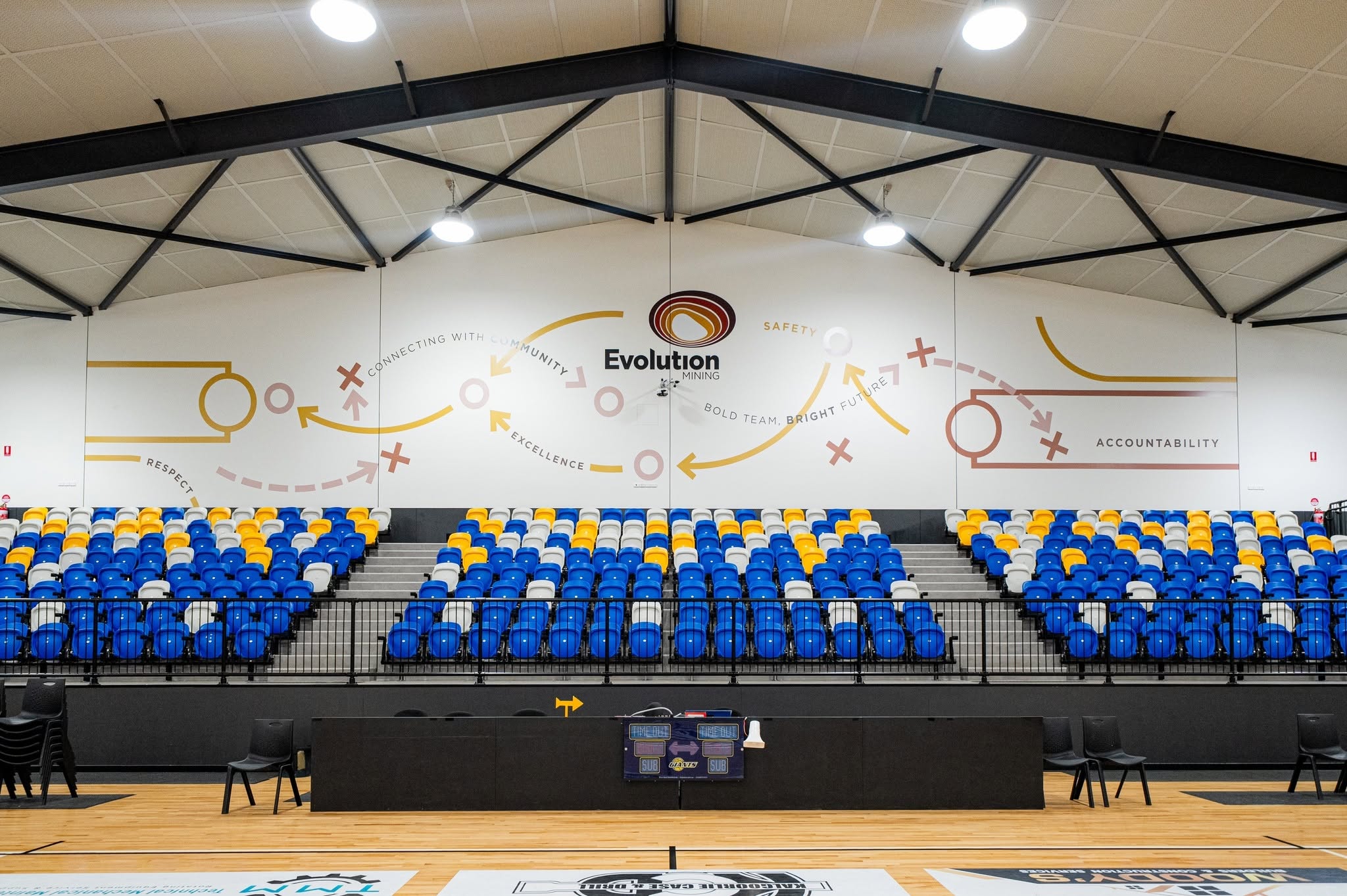
The redevelopment retained and refurbished the original three-court stadium while adding two new indoor courts, including a purpose-built show court.
New changerooms, amenities, administration areas, referee and first-aid facilities, storage, canteen and bar facilities, function areas, corporate viewing spaces and modern spectator seating transformed the entire precinct.
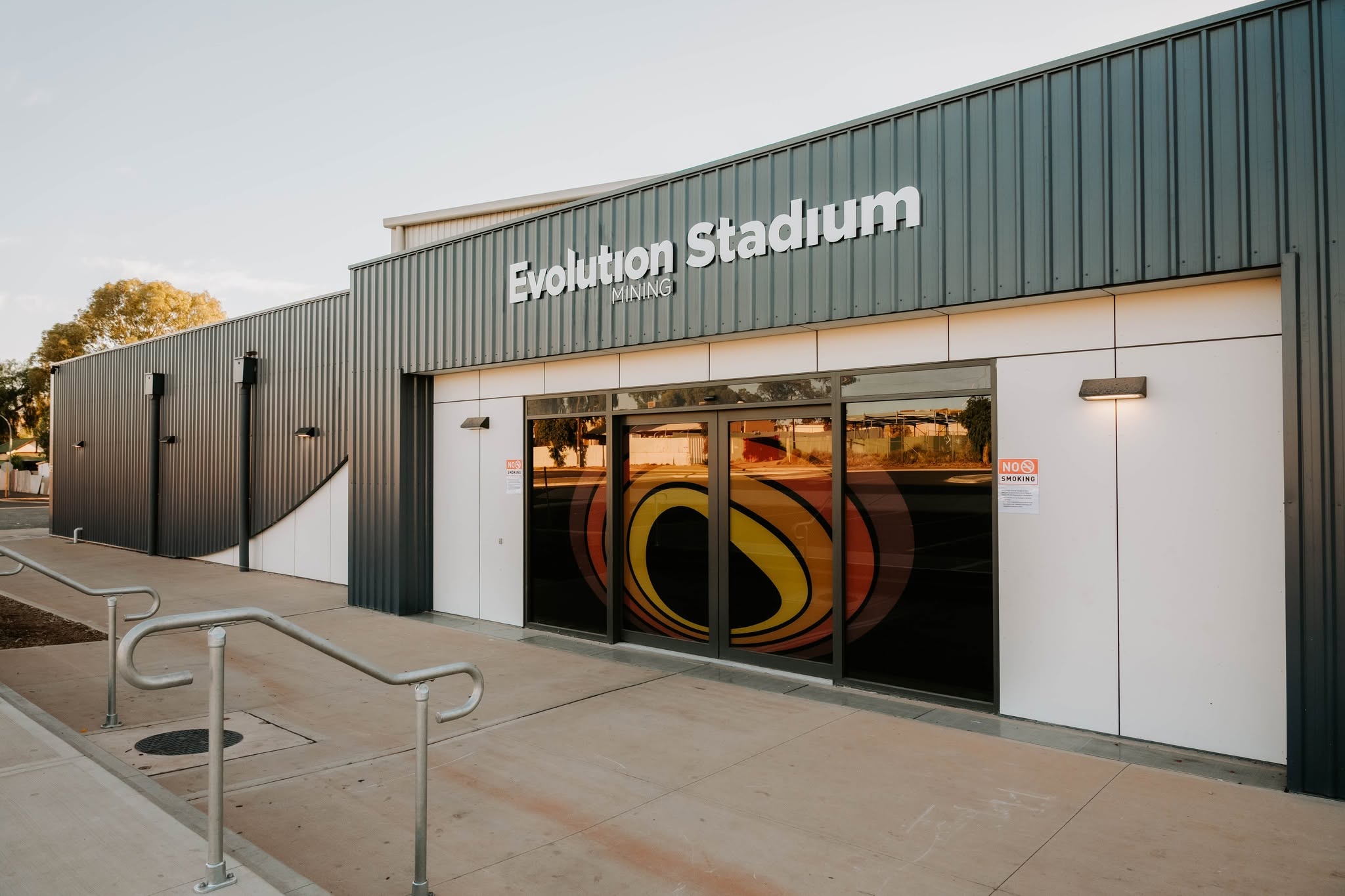
On 30 January 2025, the redeveloped stadium was officially opened.
With Evolution Mining securing naming rights, the home of Goldfields basketball entered its newest chapter as Evolution Mining Stadium.
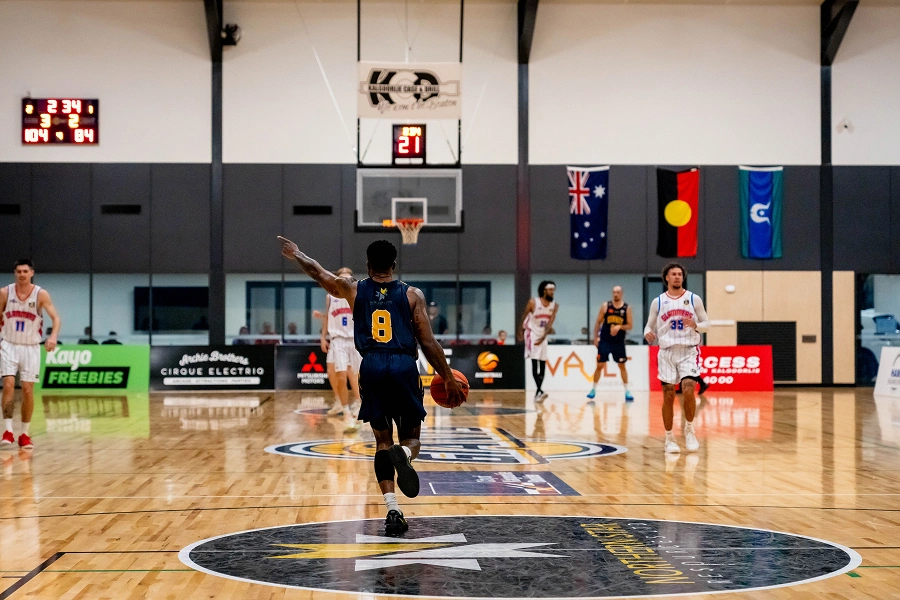
Today the venue provides five indoor courts, two show-court capable spaces and seating for more than 1,000 spectators, providing a home for everyone from children picking up a basketball for the first time to the Goldfields Giants competing in NBL1 West.
But perhaps the most important part of the new stadium is that it remains exactly where those early pioneers built basketball decades earlier.
- The buildings have changed.
- The courts have changed.
- The standard of basketball has changed.
- But the spirit behind them has not.
Evolution Mining Stadium exists because generations of people, from Bob McIlvaine, Jack Neil, Bill Baldwin and Niels Hansen through to the volunteers, administrators and supporters of today, believed that basketball mattered to the Goldfields.
Their contribution created far more than a stadium.
They created a basketball community.